Amritsar
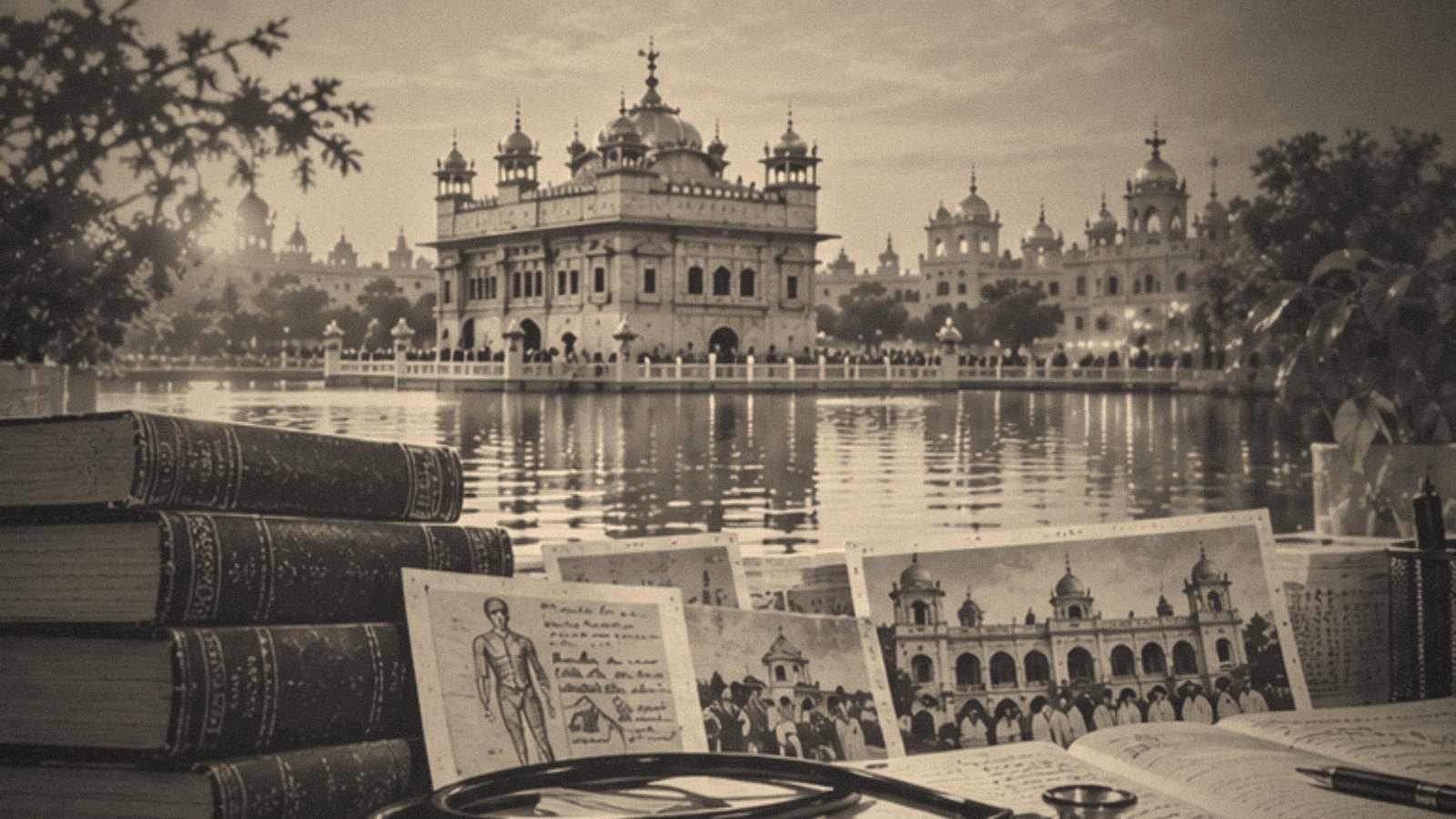
I grew up in Amritsar, a city of well over a million people that most Americans know, if at all, as the home of the Golden Temple. It is also the city founded by Guru Ram Das, the fourth Guru, whose name my medical school would later carry.
Knowledge had weight there. It occupied shelves. A book had to be obtained and opened. A teacher had to be heard. A difficult concept had to be wrestled with long enough to become part of memory, because there was no expectation that the answer would be instantly available whenever it was needed. There was no smartphone in a student’s hand, no search engine waiting for a sentence.
Many readers who grew up before the internet will recognize the feeling: the encyclopedia set on the living-room shelf, the card catalog, handwritten notes, the teacher whose explanation could suddenly make an impossible subject coherent. You did not simply access information. You went and found it. Because retrieval was difficult, internalizing knowledge had unusually high value.
That scarcity had real costs — geography mattered more, wealth mattered more, distance separated brilliant students from opportunity. But it trained the mind differently. It encouraged a person to carry more of the intellectual apparatus internally, to build a structure inside the head into which new facts could be fitted. That would matter when I entered medicine.
Evidence and Editorial Note
- Documented findings
- Amritsar founded by Guru Ram Das, the fourth Guru; population well over one million.
- Vendor representations
- None.
- Author’s recollection and tradition
- The author’s schooling and family roots are presented as personal experience; Sikh history reflects tradition and standard reference sources.
- Analysis and forecast
- The connections drawn between these places and medicine are the author’s reflection.
Independence. Not sponsored by any institution, company or health system.